

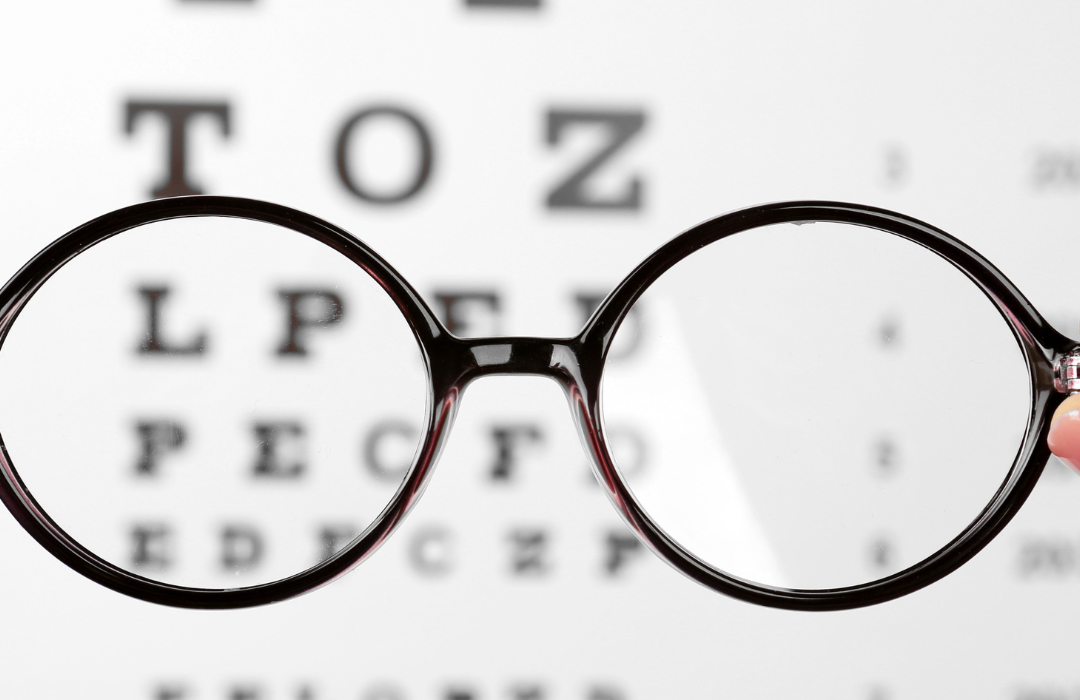
Refractive errors are the most common diagnosis after a general eye-checkup.
Refractive errors are common eye conditions that affect how light enters the eye therefore leading to blurred vision.
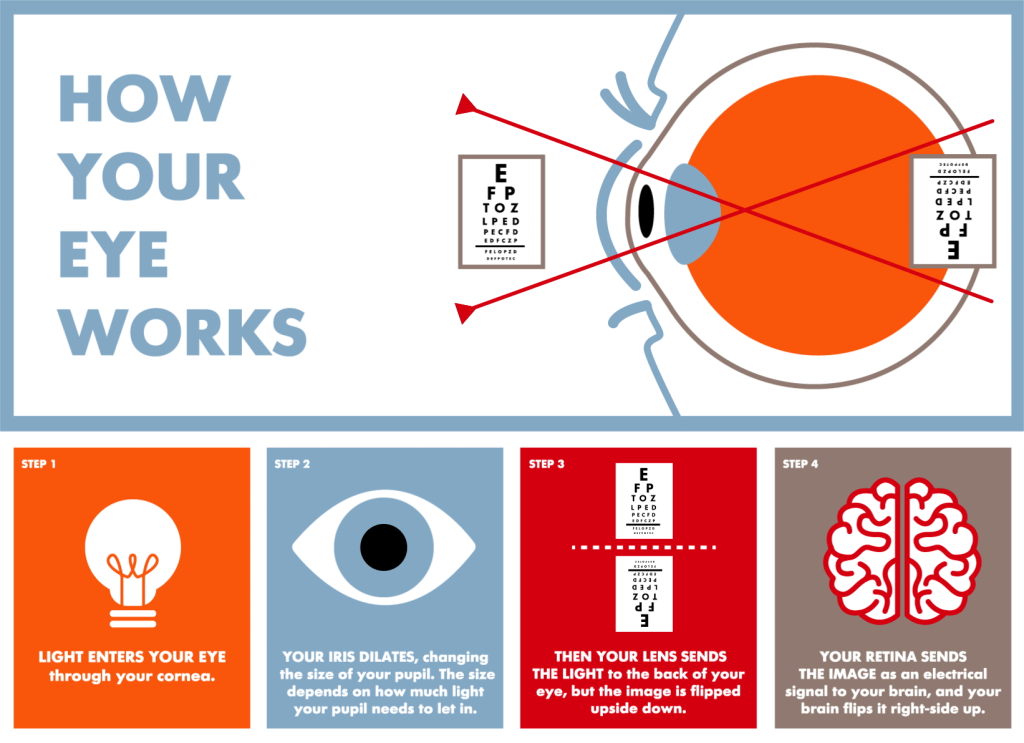
The process of vision begins when light enters the eye. Light enters the eye through the cornea which is the clear outer covering of the eye which focuses the light. The lens located behind the cornea further focuses the light onto the retina. The retina has receptors that are responsible for focusing the image. The cornea and lens works together to make sure the image you are looking at is clear. The Optic nerve then carries the signals from the retina to the brain which transmits information about the image where it is processed and interpreted therefore creating the perception of a visual scene. This complex process allows you to see clearly by converting external stimuli into meaningful visual information. The image below shows how visual interpretations are made.
Refractive errors can disrupt this process, leading to blurry, distorted vision.
There are 4 main types of refractive error
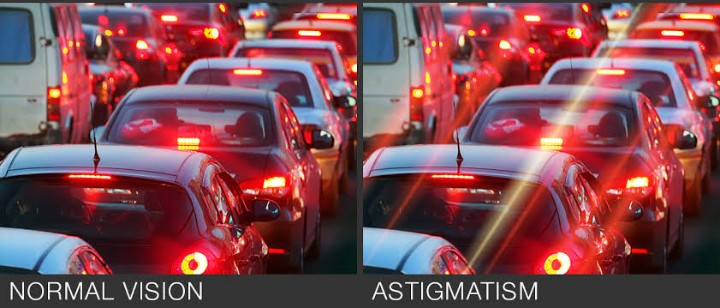
- Astigmatism: This refractive error occurs when the cornea or the lens of the eye has an irregular shape leading to blurred and distorted vision. In a normal eye the cornea and the lens are smooth and evenly curved, allowing light to focus sharply onto the retina. However in astigmatism, the cornea or lens has a more oval or rugby ball shaped curvature causing light to focus unevenly. Blurry vision can occur at any distance, and one is often more sensitive to light. Individuals with astigmatism often have difficulty seeing fine details. Images appear fuzzier and more distorted especially during the nights where artificial light. Uncorrected astigmatism can lead to symptoms such as eye strain, headaches, nausea and discomfort after prolonged periods of visual tasks such as computer work. Astigmatism can be present from birth or may develop over time due to factors such as eye injuries or changes in the corneas shape. Astigmatism is not often ‘outgrown’ naturally and therefore corrective measures at an early age may help to reduce or stabilize the degree of astigmatism. In some cases particularly in childhood, the degree of astigmatism may change. It is important that although changes may occur, astigmatism is a lifelong condition that may or may not require treatment.
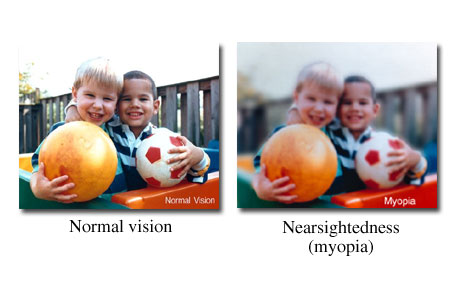
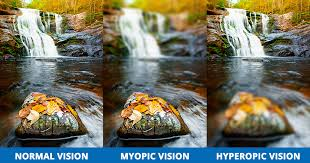
2. Myopia: The most common refractive error in which individuals cannot see distant objects clearly. This is also known as nearsightedness. Myopia occurs then the eyeball is too long, or the cornea has too much curvature. The main symptom of myopia is difficulty in seeing distant objects clearly. As one approaches or moves closer to the object, vision appears clearer. People with myopia tend to form a habit of squinting their eyes. Squinting reduces the amount of light entering the eye therefore improving focus and clarity. This is not healthy and adds strain on an individual’s eyes. Squinting adds a temporary relief but causes more long-term damage. Squinting is a sign of uncorrected myopia that should be addressed by an Optometrist.
Myopia develops during childhood and tends to progress until the eye stops growing, usually in late adolescence or early adulthood. There is a genetic component to myopia and if left untreated, one is at risk for other eye conditions such as retinal detachment, glaucoma and cataracts. Some surgeries such as refractive correction surgery may be considered to reduce dependance on corrective lenses. Regular Eye-check ups are important in maintaining good vision by updating the corrective eye measures. The degree of myopia may change anywhere between 6 months to 2 years and therefore regular eye checks are important to update irregularities. Myopia is corrected with minus powered lenses which may be provided in the form on spectacles or contact lenses.
New innovative technologies have recently been introduced to minimize the progression of myopia in children. These special lenses are offered by Paediatric Optometrists such as The Optik Studio.
3. Hyperopia: Hyperopia is commonly known as farsightedness as one is able to see objects at a distance more clearly than objects up close. As the opposite to myopia, hyperopia occurs when the eyeball is too short, or the cornea has too little curvature.
People with hyperopia often find it difficult to do tasks up close such as reading or using a computer. Common symptoms include eyestrain, headaches or blurred vision. Hyperopia can be present from birth and children may not initially show symptoms, however as the eyes grow, hyperopia may become more noticeable.
Hyperopia is a common refractive error that is corrected with plus powered lenses. Hyperopia may occur in all ages. Untreated hyperopia will lead to eye strain and constant discomfort.
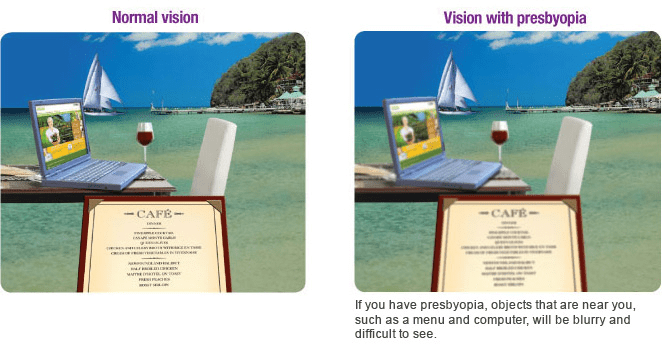
4. Presbyopia This one is particularly for our elderly individuals! As one approaches the age of 40, the natural ageing process of the eyes causes difficulty in focusing objects up close.
The lens of the eye becomes less flexible over time, making it challenging to focus on close objects. Presbyopia tends to progress over the years. This is a natural ageing process of the eye which is unpreventable. Reading glasses, bifocals or multifocals are commonly used to correct presbyopia. These lenses provide magnification to view objects up close clearly. Contact lenses may also be beneficial if one prefers not to wear glasses.
People who often complain that their arms are ‘too short’ as the further an object is held, the clearer one would see.
Presbyopia is a natural common part of aging and affects everyone to some extent. Regular eye exams are important to monitor changes in vision and adjust corrective measures accordingly.
Refractive Errors are really common but corrective measures such as spectacles, contact lenses or refractive surgery are often used to address these conditions and improve overall vision and lifestyle. Regular eye examinations are essential for diagnosing and managing refractive errors.
Book an eye test with the Optik Studio for a comprehensive eye test!